Stop Getting Dressed and Start Getting Intentional: How to Build a Style That's Unmistakably You
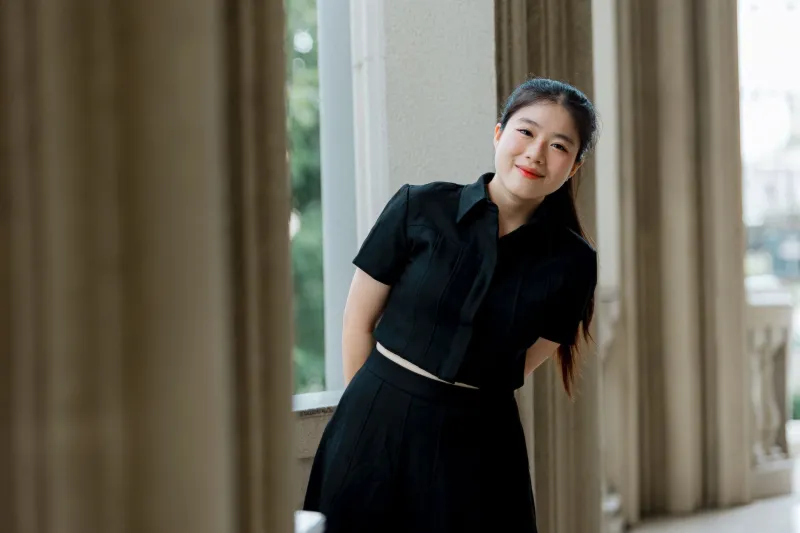
You've probably seen her. She walks into a coffee shop, a work meeting, a Saturday farmer's market — and she just looks together. Not overdressed, not trying too hard. Just effortlessly, recognizably herself. Her outfit feels like a signature, like a handwriting style you'd recognize anywhere.
Here's the thing: that's not magic, and it's not a massive budget. It's intentionality. It's the result of someone who took the time to figure out what actually works for them — and then stopped second-guessing it.
At Sarami Boutique, we believe that curated style isn't a luxury reserved for fashion insiders. It's something anyone can build, one thoughtful piece at a time. So let's talk about how.
What a Personal Uniform Actually Means
The phrase "personal uniform" gets thrown around a lot, but it doesn't mean wearing the same outfit every single day (unless that's genuinely your thing — no judgment). It means identifying a consistent visual language: a small collection of silhouettes, textures, colors, and proportions that you return to again and again because they work for your body, your lifestyle, and your personality.
Think of it like a signature palette. A painter doesn't use every color in existence in every piece. They develop a relationship with certain hues, certain brushstrokes. Your wardrobe can work the same way.
Research in environmental psychology suggests that decision fatigue is a very real phenomenon — and closets full of options we don't actually love are one of the sneakiest culprits. When you narrow your wardrobe down to pieces that all genuinely work together, getting dressed stops feeling like a chore and starts feeling like an extension of who you are.
The Closet Audit: Where Honesty Gets Uncomfortable
Before you can build forward, you have to take a clear-eyed look at what you've already got. Pull everything out. Yes, everything.
As you sort through the pile, ask yourself three questions about each item:
- Have I worn this in the last 12 months?
- When I put it on, do I feel like myself — or like someone I'm pretending to be?
- Does this piece work with at least three other things I own?
Anything that fails two or more of those questions is likely taking up real estate it hasn't earned. Set those pieces aside. You can donate, consign, or swap them — but don't let guilt keep them in your rotation.
What remains after the audit is your baseline. These are the pieces your subconscious already trusts. Look at them carefully. What patterns emerge? Are you drawn to neutral tones, or do pops of color keep showing up? Do you gravitate toward tailored cuts or something more relaxed and flowy? This is your style data.
Finding Your Five to Seven Key Pieces
Style experts often talk about the concept of a "capsule" — a core group of versatile, high-quality items that anchor your entire wardrobe. For a personal uniform to actually function, you want roughly five to seven of these anchor pieces. Not five to seven total items in your closet, but five to seven foundational ones that everything else orbits around.
For someone whose lifestyle is a mix of remote work and weekend social plans, those anchors might look like:
- A well-fitted pair of straight-leg dark jeans
- Two or three elevated basics in a consistent color family (think a warm cream, a soft sage, or a classic black)
- A structured blazer or oversized jacket that transitions across occasions
- A comfortable but polished shoe in a neutral tone
- One or two statement accessories that feel uniquely personal — a vintage-inspired ring, a hand-tooled leather bag
The specifics are less important than the principle: these pieces should be things you'd reach for instinctively, things that make you feel grounded rather than costumed.
Color Palettes: The Quiet Power of Consistency
One of the fastest ways to make a wardrobe feel cohesive is to get intentional about color. That doesn't mean limiting yourself to one shade, but it does mean identifying a palette — typically three to five colors — that you genuinely love wearing and that work well together.
If you look at your closet audit and notice you own seven versions of dusty blue and olive green, that's not an accident. That's your palette speaking to you. Work with it.
A simple framework: choose one or two neutrals that form the backbone of your wardrobe, one or two deeper or richer tones that add depth, and one accent color that shows up in accessories or statement pieces. When everything in your closet speaks the same color language, getting dressed becomes almost effortless — because almost everything goes with almost everything else.
Investing vs. Spending: A Different Way to Think About Shopping
Once you've identified your signature anchors and your palette, shopping becomes a fundamentally different activity. Instead of browsing impulsively and buying things because they're on sale or because an algorithm surfaced them at the right moment, you're shopping with a specific brief in mind.
This is where boutique shopping genuinely shines. When you walk into a curated space — or browse a carefully edited online boutique — you're not wading through thousands of items that have nothing to do with your aesthetic. You're encountering pieces that have already been selected with intention, often by people who care deeply about quality, craftsmanship, and originality.
At Sarami Boutique, every piece in our collection is chosen because it brings something real to the table — an interesting textile, a silhouette that flatters a range of bodies, a detail that makes the piece feel special without being fussy. Shopping this way means fewer impulse buys and more pieces you'll actually wear for years.
Give Yourself Permission to Repeat
Here's something the fast fashion industry doesn't want you to internalize: wearing the same great outfit more than once is not a fashion faux pas. It's a flex.
When you love a piece and it works for you, wear it. Wear it a lot. Style it different ways, sure — but don't feel pressured to constantly introduce newness for its own sake. The most stylish people tend to have a relationship with their clothes. They know exactly how a certain jacket falls on their shoulders, exactly which shoes make a particular dress sing.
That familiarity is part of what makes a personal uniform feel so magnetic to others. It reads as confidence, as self-knowledge. And honestly? It is.
Start Small, But Start Now
Building a personal style signature doesn't happen in a weekend. It's an evolving process — one that shifts as your lifestyle changes, as you discover new designers, as your tastes mature. But it does have to start somewhere.
Pick one thing from your closet audit to do this week. Maybe it's finally donating those three pairs of jeans you never reach for. Maybe it's writing down five words that describe how you want to feel when you get dressed. Maybe it's investing in one really great piece that hits every mark on your checklist.
Small, intentional steps compound into a wardrobe — and a style — that's genuinely, unmistakably yours. And that's worth more than any trend cycle could ever offer.