Why Buying Less From the Right Place Means Loving Everything You Own

Picture two closets. The first one is packed—hangers shoulder to shoulder, a few tags still dangling, a drawer that won't quite close. The second one has breathing room. Every piece has a story. Nothing in there feels like a mistake.
Chances are, you already know which closet belongs to the boutique shopper.
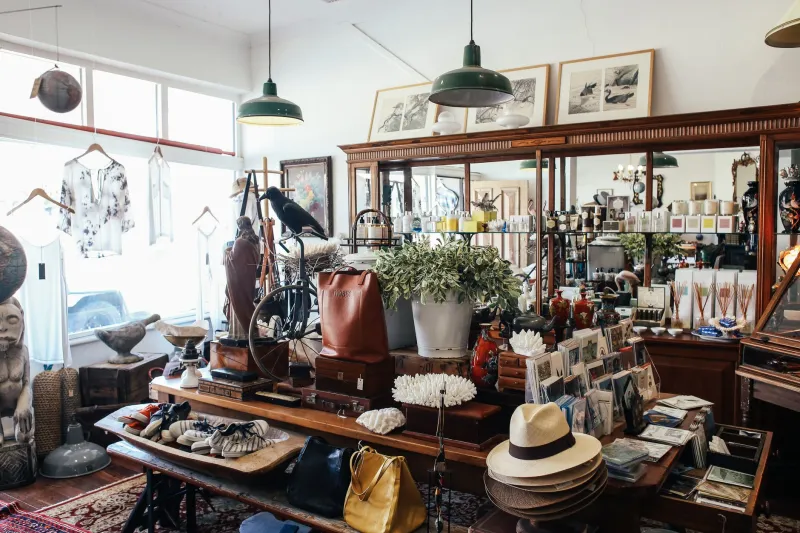
There's something that happens when you trade the overwhelming square footage of a big-box retailer for the curated intimacy of a boutique. It's not just a vibe shift. It's actually a different relationship with your clothes—and the psychology behind it is fascinating.
The Paradox of Too Many Choices
Here's something that sounds counterintuitive: having more options doesn't make you a better shopper. It actually makes you a worse one.
Psychologists call it the paradox of choice. When we're faced with hundreds of nearly identical blouses or a wall of denim in thirty washes, our brains don't rise to the occasion—they short-circuit. We either freeze up and leave empty-handed, or we grab something impulsively just to escape the overwhelm. Neither outcome leads to a piece you'll actually reach for on a Tuesday morning.
Boutiques sidestep this trap entirely. A well-curated shop might carry three denim styles instead of thirty. That's not a limitation—it's a gift. When a buyer has already done the heavy lifting of editing down to only what's genuinely worth your attention, your decision-making energy gets to go toward you: what fits your life, your aesthetic, your body. The result? You walk out with something you actually thought about, rather than something you panic-grabbed off a sale rack.
Curation Is a Form of Respect
Mass-market retail operates on volume. The model depends on you buying frequently, replacing often, and not thinking too hard about any individual item. Boutique retail works the opposite way. Every piece on that floor was chosen deliberately—by someone who considered color stories, fabric quality, how it would layer with other items, and whether it would hold up past one season.
That intentionality transfers to you as the shopper. When you're in a space where everything has been pre-vetted, you start asking better questions. Does this work with what I already own? Will I still want this in two years? Is this actually me, or am I just caught up in the moment?
Boutique environments naturally encourage that kind of reflective shopping. There's no sensory overload pulling your attention in twelve directions. There's no clearance bin chaos whispering that you'd be foolish not to grab it. There's just a thoughtful selection and a little room to breathe—which turns out to be exactly what good decision-making needs.
The Stuff You Keep vs. The Stuff That Stays
Here's a distinction worth making: there's what you keep in your closet, and there's what actually stays in your closet long-term. Most of us have plenty of the former and not nearly enough of the latter.
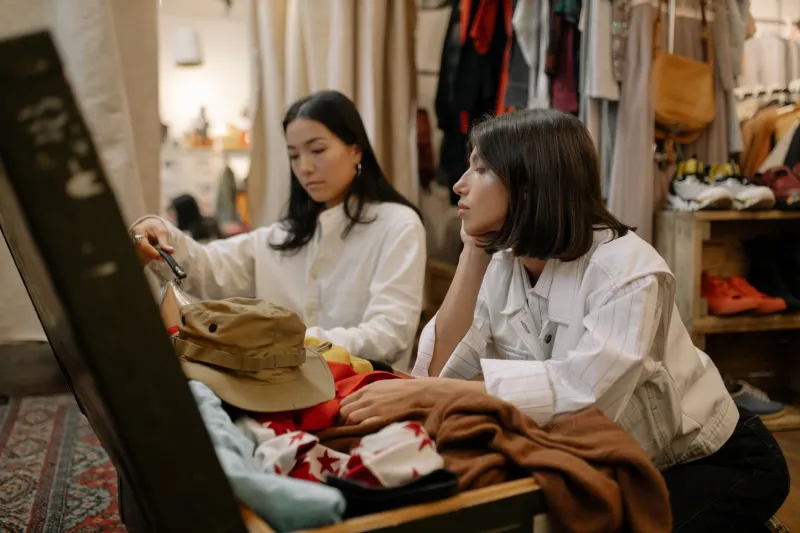
When something comes from a curated source—whether that's a trusted boutique or a stylist who knows your taste—it tends to earn permanent residency. It fits better, because someone helped you try it on with real feedback rather than a rushed fitting room with a line outside. It wears better, because boutique buyers tend to prioritize fabric and construction over price-point optics. And it feels better, because you made a considered choice rather than an impulse one.
That last point is more important than it gets credit for. The emotional weight of our clothes is real. Research consistently shows that people feel more confident and more themselves when wearing items they consciously chose. A piece you deliberated over—that you held up, thought about, maybe even slept on—carries a different energy than something you grabbed because it was $14.99 and you were bored on a Saturday.
Fewer Pieces, More Outfits
One of the biggest myths in fashion is that a full closet means more outfit options. In reality, decision fatigue means most people with overstuffed wardrobes rotate through the same eight to ten items anyway—while the rest hangs there collecting guilt.
A boutique-built wardrobe flips that dynamic. When every piece was chosen with intention, they tend to work together. Colors are cohesive. Silhouettes complement each other. That top you bought actually goes with three things you already own, because you or someone helping you thought about that before you bought it.
This is the practical magic of curation: it compounds. Each intentional purchase makes your existing wardrobe stronger rather than more cluttered. You're not adding to a pile—you're completing a picture.
The Long Game of Loving Your Wardrobe
There's a version of getting dressed that feels like a chore—digging through options, settling for something, leaving the house feeling vaguely off. And then there's the version where you open your closet and everything in there is something you genuinely like.
That second version isn't about spending more money. It's about spending it differently. It's about choosing a shopping environment that respects your time, your taste, and your intelligence as a consumer. It's about trusting that a carefully chosen fewer is worth infinitely more than a casually accumulated many.
Boutique shopping isn't a luxury reserved for a certain budget or lifestyle—it's a mindset. It's deciding that your wardrobe deserves the same thoughtfulness you bring to anything else you care about. And once you start shopping that way, it's genuinely hard to go back.
Because it turns out, the best thing you can do for your closet isn't adding more to it. It's being pickier about what gets in.