Four Square Feet of Truth: Confessions From the Boutique Fitting Room
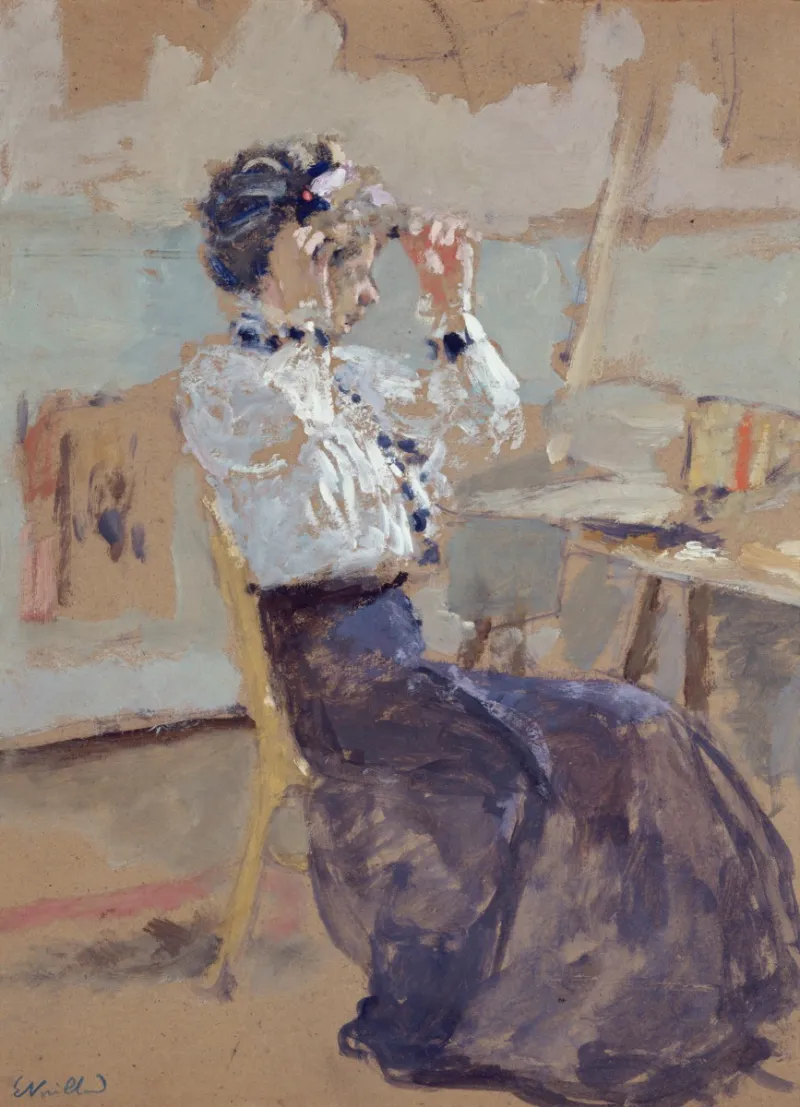
Photo: Édouard Vuillard, Public domain, via Wikimedia Commons
There's a particular sound a boutique fitting room makes. Not the fluorescent hum of a big-box store, not the tinny latch of a mall chain — but the soft slide of a wooden hook, the rustle of tissue paper, the muffled voice of a shop owner saying, through the curtain, "Try the other size. Trust me."
That square of space — usually four feet by four feet, sometimes barely more than an afterthought in the back of the store — is the most consequential real estate in retail. It's where a browsing trip becomes a buying decision. Where a bad day turns around. Where a woman in her sixties realizes she's been wearing the wrong size for a decade. We asked boutique owners and shoppers around the country what actually happens in there, and the answers were more emotional than we expected.
The Curtain Is a Confession Booth
"People say things in the fitting room they'd never say on the sales floor," says Marisol, who runs a small women's shop in Asheville, North Carolina. "They talk about their bodies, their divorces, their daughter's wedding coming up. The fitting room strips away the performance."
That vulnerability is exactly why the curated fitting room works differently than the algorithmic one. When you're alone in a Target dressing room with six items you sort of wanted, there's no one to say "the neckline is doing something unflattering — let me show you the other top." When you're in a boutique, there's a person ten feet away who has seen hundreds of bodies, hundreds of fits, and knows the difference between a piece that's wrong for you and a piece that's just wrong for the hanger.
The Breakthrough Moments Stick
Ask shoppers about their fitting room memories and they don't describe transactions. They describe turning points.
One shopper we spoke with, Dana from Portland, remembers the exact dress: "The owner knocked and said, 'You're standing like you're sorry you're in there. Stand like it's already yours.' I did. And I bought it, and I wore it to my mother's funeral, and it's the only thing in my closet that feels like armor."
These moments aren't accidents. Boutique owners design for them — proper lighting that doesn't lie, mirrors positioned at honest angles, hooks at a height that doesn't require contortion, and crucially, a fitting room big enough for a friend or a stylist to weigh in. Compare that to the shoebox stalls at department stores, where you're lucky if the door locks.
Why a Human Outside the Door Changes Everything
The difference between a curated fitting room and a self-serve one isn't just service — it's feedback. In a boutique, the person outside the door:
- Sees what you can't. The back of the dress. The way the waistband sits when you move. The pull across the shoulders that means you should size up, not down.
- Brings the piece you didn't pick. "I grabbed this in the other color while you're in there" is a sentence that has quietly built more great wardrobes than any recommendation engine.
- Saves you from yourself. Sometimes the kindest thing a shopkeeper can say is "that's not it — put it back and let's keep looking."
That last one matters most. Fast fashion is built on a low bar: does it technically fit? Boutique shopping is built on a higher one: does it belong in your life?
What Shoppers Get Wrong About the Room
Plenty of people avoid the fitting room entirely — order online, try it at home, return what doesn't work. It feels efficient. But it flips the emotional equation. Trying something on in your own bathroom, tags dangling, is a verdict on your body. Trying something on in a boutique, with someone who wants you to walk out feeling like the best version of yourself, is a collaboration.
And the stakes are lower than you think. Nobody in a boutique fitting room is judging you. The owner has seen it all, this morning alone. What they're actually evaluating is the garment — how it moves, where it fails, whether it deserves a place on their floor.
The Takeaway
The fitting room is the moment shopping becomes personal — the point where a piece of clothing either joins your story or goes back on the rack. It deserves better than fluorescent lighting and a folding chair. So the next time a shopkeeper says "let me know if you need a different size," take them up on it. That's not a sales pitch. That's the whole point of shopping small: someone's actually paying attention.
Four square feet. One honest mirror. One person in your corner. That's the entire secret.