Where Does Your Money Go After Checkout? Follow One Boutique Purchase Around the Block
The Receipt Is Just the Beginning
You tap your card at Sarami Boutique, grab the tissue-wrapped bag, and head out. Transaction complete, right? Not even close. What you just did was set off a chain reaction that economists call the "local multiplier effect," and honestly, it's way more interesting than it sounds.
Studies from organizations like the American Independent Business Alliance and the Institute for Local Self-Reliance have consistently found that roughly 48 cents of every dollar spent at a locally owned business stays in the community, compared to about 14 cents at a chain retailer. Nearly half of the money you spent just went back to work within a few miles of the register.
Let's follow it.
Stop One: The Owner's Tuesday
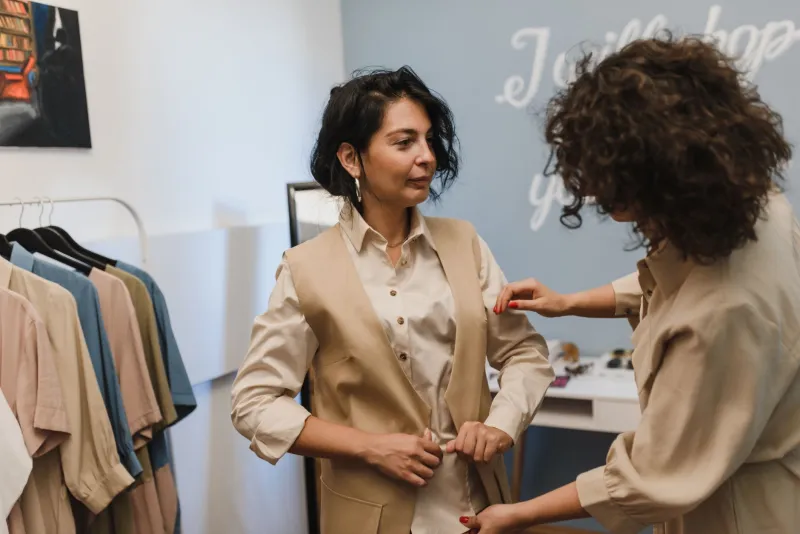
First, your purchase pays the boutique owner. She's not routing profits to a corporate office in another state — she's paying the electric bill, ordering more inventory from a small designer she met at an Atlanta trade show, and yes, finally fixing that flickering fitting room light.
Because she lives here, she banks at the community credit union, uses the local print shop for her signage, and hires the teenager down the street for holiday shifts. Each of those is another mini-transaction that never leaves town.
Stop Two: The Barbershop
On Thursday, the boutique owner gets a haircut. Her barber, paid in part by money that started as your sweater, has a standing order at the bakery two doors down. The bakery owner, in turn, has been eyeing a linen blazer at — where else — the boutique.
This is the handshake economy in action: money doesn't exit through a drain, it circulates like blood. Economists have estimated that locally spent dollars can recirculate two to four times before leaving the area, versus once for dollars spent at national chains.
Stop Three: The Farmers Market
Come Saturday, the barber's wife is buying heirloom tomatoes and mentions the bakery's new sourdough. The vendor across the aisle, a ceramicist, decides she needs a birthday gift and wanders into the boutique that afternoon. Maybe she buys a scarf. Maybe she buys three.
Notice what's happening: nobody in this loop needed a marketing budget. The relationships are the marketing. That's something no algorithm can replicate, no matter how well it knows your shoe size.
The Data Says This Isn't Nostalgia
If you assumed shopping small was a pandemic-era sentiment that faded with the mask mandates, the numbers say otherwise. Surveys from Intuit QuickBooks and the National Federation of Independent Business have tracked a sustained surge in deliberate local spending, with a majority of American consumers — particularly Gen Z and millennials — reporting they actively seek out independent retailers even when it costs a bit more.
Why? The reasons cited aren't sentimental. Shoppers point to better product knowledge, more distinctive inventory, and the simple fact that they're tired of showing up to brunch in the same mass-produced dress as three other people.
In other words, the local shopping movement graduated from "feel-good" to "makes sense."
What Your Dollar Actually Buys
Here's the honest math of a boutique purchase:
- The garment itself — often from an independent designer or small-batch maker
- A wage — for someone who coaches Little League in your district
- Local taxes — that fund the library, the parks, the pothole repair you complain about
- A referral — the owner recommending her tailor, her florist, her favorite lunch spot
A chain store purchase can do some of that. But the difference between 14 cents and 48 cents is the difference between a neighborhood that looks like everywhere else and one that looks like itself.
The Quiet Power of Showing Up
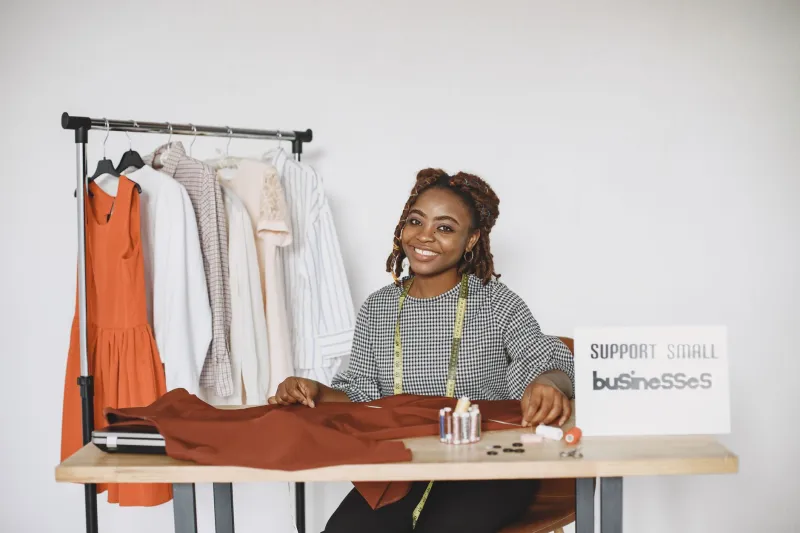
None of this requires a manifesto. You don't have to swear off Target or feel guilty about Amazon. It just means that when you have a choice — and you usually do — you know what's at stake.
That sweater you bought on Saturday? It's warm, it fits, and it's one of a kind in your circle. But its real job was quieter than that: it paid a barber, fed a bakery, and kept a light on above a fitting room.
Not bad for one receipt.