Points Don't Build Loyalty — People Do: Rethinking What It Means to Reward Your Best Customers

Every boutique has a version of the loyalty card. Buy ten, get one free. Earn points on every purchase. Redeem for a discount. It's a familiar system, borrowed from coffee shops and airlines, applied to fashion with the assumption that what works for a latte will work for a cashmere sweater.
It doesn't. And the boutiques that have figured this out are doing something genuinely different — and genuinely better.
Why Standard Rewards Programs Fall Flat in Fashion
Points-based loyalty programs operate on a simple premise: reward purchasing behavior to encourage more purchasing behavior. In categories where the product is largely interchangeable — gas, groceries, flights — this works reasonably well. You're going to buy gas anyway; a few cents off per gallon is a nice bonus.
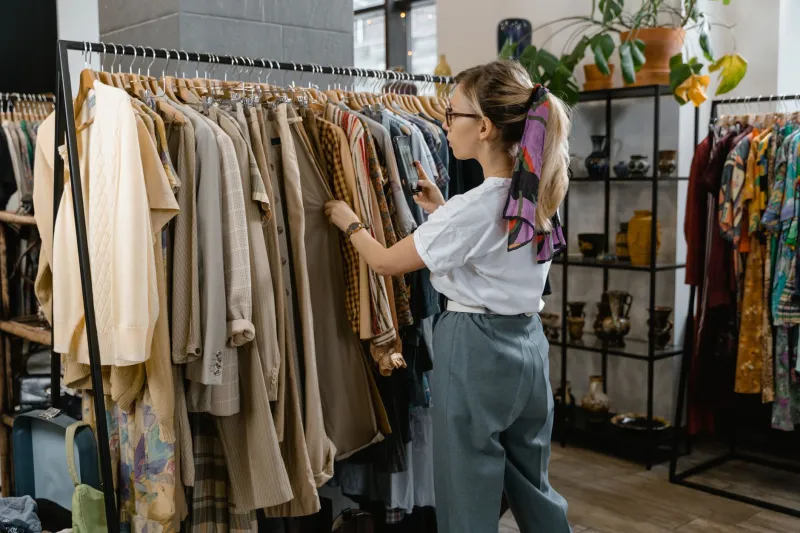
Fashion isn't that. Especially boutique fashion, where the whole value proposition is not interchangeable. You don't shop at a small, curated boutique because it's convenient. You shop there because it's specific — because the selection, the atmosphere, and the people reflect something you can't get anywhere else. A points system that treats your loyalty like a transaction misses this completely.
Worse, it can actually cheapen the relationship. When a boutique's primary retention tool is "spend $500, get $25 off," it's implicitly saying: we value your money. That's a different message than: we value you. And customers — especially the kind of thoughtful, intentional shoppers who gravitate toward boutiques — notice the difference.
What Actually Creates Loyalty in a Boutique Context
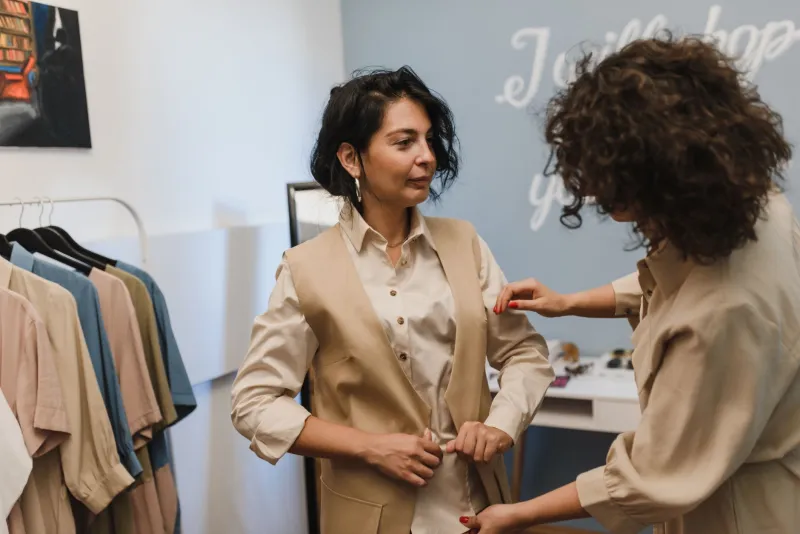
Talk to long-term boutique regulars and you'll hear a consistent theme: they come back because of how the place makes them feel. Not because of a coupon. Not because of a points balance. Because someone remembered their name. Because a stylist texted them when something came in that was "so them." Because they walked in stressed and walked out feeling put together, seen, and a little more like themselves.
That's the real loyalty driver, and it's almost entirely relational. It's built through accumulated small moments of genuine attention — the kind of attention that a punch card simply cannot replicate.
Forward-thinking boutiques are starting to build programs around this reality rather than around the transactional model they inherited from big retail. The results are striking.
What the Best Boutique Loyalty Experiences Actually Look Like
Some boutiques are ditching the points model entirely in favor of what might be called access-based loyalty — giving their best customers not discounts, but experiences and information that money can't simply buy.
This looks like early access to new arrivals before they hit the floor. Invitations to private shopping events with wine and a stylist on hand. First notice when a beloved piece comes back in stock. A seasonal style consultation that isn't a sales pitch — it's genuinely about helping you figure out what you need.
Other boutiques are leaning into personalization as the reward. Instead of a discount triggered by spending, they offer their most loyal customers a kind of wardrobe memory service: a running profile of what you've bought, what you loved, what didn't work, and what you're looking for next. When something arrives that fits your profile, you hear about it first. That's not a perk — that's a service. And it's one that's genuinely hard to replicate anywhere else.
Then there are boutiques building community as the loyalty structure. Regular customers are invited into a circle that goes beyond shopping — style workshops, local designer meetups, seasonal lookbook collaborations where real customers are featured. The boutique stops being a store and becomes something closer to a creative community with a shop attached. You're not loyal because you get points. You're loyal because you belong.
The Personalization Gap Is the Opportunity
Here's the irony of most boutique loyalty programs: the boutique already has everything it needs to offer truly personalized rewards. It knows its customers. It knows what they buy, how they dress, what they're looking for, and — if the relationships are what they should be — a fair amount about their lives beyond the fitting room.
Big-box retailers spend millions trying to approximate this through data. Boutiques have it organically. The opportunity is to actually use it — to build reward structures that reflect genuine knowledge of the individual rather than generic incentives applied uniformly.
A customer who always gravitates toward color doesn't need a discount on neutrals. A customer who's been building a professional wardrobe for a new job doesn't need an invite to a casual weekend pop-up. A customer who mentioned she's going to a wedding in October needs someone to remember that in August and pull some options before the good stuff is gone.
This is the personalization gap — the space between what most loyalty programs offer and what boutiques are actually capable of delivering. The boutiques closing that gap are the ones building genuine, lasting loyalty.
Loyalty Isn't Earned at the Register
The transactional model of loyalty — spend money, earn rewards — assumes that the relationship between customer and boutique is fundamentally about commerce. But the boutiques that retain their best customers for years, the ones that generate genuine word-of-mouth and build real community, know that commerce is just the surface.
Under the surface is trust. Familiarity. The comfort of being known in a world that mostly treats you like a data point. The quiet pleasure of walking into a room where someone is genuinely glad to see you and actually knows what to show you.
You can't put that on a loyalty card. But you can build it, one real interaction at a time. And the boutiques that prioritize that — over points, over discounts, over any transactional metric — are the ones their customers would genuinely miss if they disappeared.
That's not a rewards program. That's a relationship. And it's worth infinitely more.