Less to Choose From, More Room to Be You: The Hidden Gift of a Curated Wardrobe

Open any major retail app and you'll find thousands of items in any given category. Thousands of black pants. Hundreds of variations on the same blazer. An almost incomprehensible number of ways to spend $89 on a top that might work for you, or might not, and won't really know until it arrives two weeks from now and you try it on in your bathroom under terrible lighting.
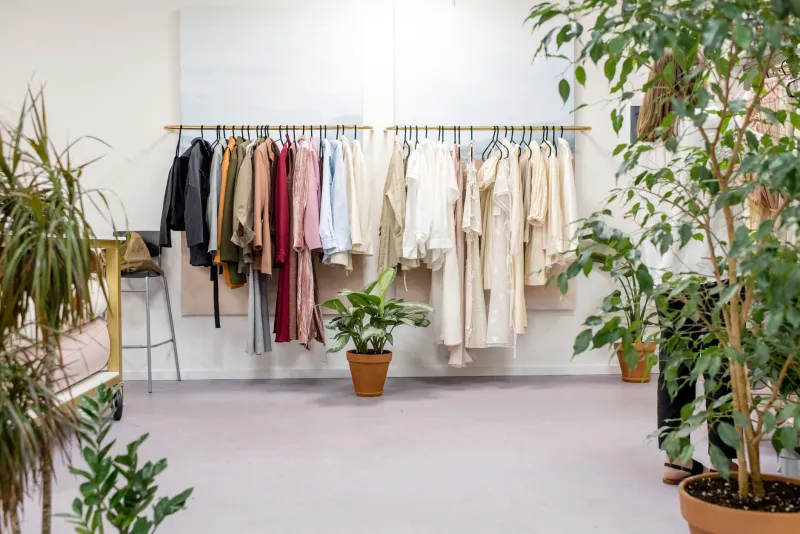
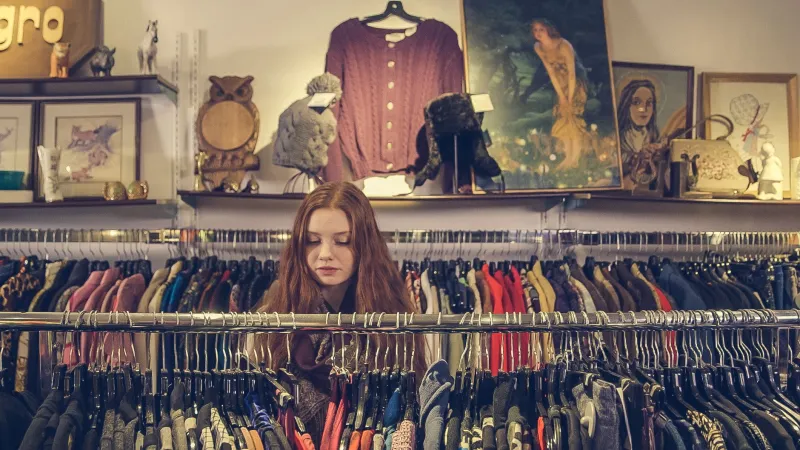
Now walk into a boutique. There are maybe twelve tops on the rack. A handful of pants in cuts the buyer actually believes in. Jewelry selected because it works with the clothes, not just because it photographs well. And somehow — somehow — you walk out with something you love.
That's not a coincidence. That's curation doing exactly what it's supposed to do.
Your Brain Was Not Built for Infinite Options
Decision fatigue is real, and fashion is one of the places it hits hardest. The more choices we face, the worse our decisions get — not because we're lazy or indecisive, but because our brains have a finite amount of decision-making energy. Spend it all comparing 200 near-identical blouses and you'll either buy the wrong one or buy nothing at all and feel vaguely terrible about the whole experience.
Psychologist Barry Schwartz famously called this the "paradox of choice" — the idea that more options don't make us happier, they make us more anxious. We second-guess ourselves. We worry about what we're missing. We buy something and immediately wonder if we should have bought the other thing.
A curated boutique sidesteps this entirely. When a buyer has already done the hard work of filtering out the noise — choosing only what's worth your attention — you're not choosing from everything. You're choosing from the good stuff. That's a completely different cognitive experience, and it produces completely different results.
Constraint Forces Clarity About What You Actually Like
Here's the part nobody talks about: when you don't have infinite options, you have to get honest with yourself pretty quickly. You can't keep deferring the question of what you actually want by scrolling to the next page. You have to look at what's in front of you and decide whether it's you.
That process — uncomfortable as it sometimes feels — is how you learn your own style. Not by pinning a thousand things on a mood board, but by standing in front of something real and asking: does this feel like me? Why or why not? What would I need to feel differently about it?
Boutique shoppers develop this instinct faster than people who primarily shop online, because they practice it more often. Every visit is a small exercise in self-knowledge. Over time, you stop second-guessing your instincts. You know your answer faster. You trust it more.
The Buyer's Eye Does Some of the Work for You
One of the underappreciated advantages of shopping at a curated boutique is that someone with genuine expertise has already made a lot of calls on your behalf. A good buyer doesn't just order what's trending — they think about who their customer is, what she needs, what will actually work in her life, and what will still feel right six months from now.
That filtering is a service. When you walk into Sarami Boutique and see a rack of pieces that all feel cohesive — that feel like they go together even though they're different styles — that's not an accident. It's the result of intentional curation, and it makes your job as a shopper dramatically easier.
You're not starting from scratch every time. You're working within a framework that someone who knows fashion has already set up for you. And within that framework, your personal choices carry more weight, not less.
Fewer Pieces, More Outfits — Seriously
It sounds like a paradox, but curated collections actually produce more outfit possibilities than sprawling inventories. When every piece in a boutique has been chosen with an eye toward versatility and compatibility, the mix-and-match potential is built in. Things go together because they were selected to go together.
Compare that to an online cart full of pieces you chose in isolation, on different days, from different brands, with no one thinking about how they'd interact. You might end up with fifteen items that don't actually work together and a closet that feels full but offers nothing to wear.
Curation solves this at the source. The work of building a wardrobe that functions as a system — rather than a pile of individual purchases — is already partially done by the time you walk in the door.
The Freedom Is in the Focus
There's a reason artists work within constraints. Poets use meter. Architects work within site limitations. Chefs work with seasonal ingredients. Constraint isn't the enemy of creativity — it's often the engine of it. When you remove infinite possibility, you stop deferring and start deciding. You stop browsing and start choosing. You stop collecting and start building.
Your wardrobe works the same way. When you shop somewhere that's already done the heavy lifting of curation, you're freed up to focus on the only question that actually matters: is this me?
And the more you practice answering that question in a focused, low-noise environment, the better you get at knowing yourself. Not just as a shopper — as a person with a point of view. A style that's unmistakably yours, built not from endless scrolling but from deliberate, confident choices made with real human help.
That's what curated shopping gives you. Not less. More — of the stuff that actually counts.