When Shopping Feels Like Self-Care but Your Closet Tells a Different Story
The Feel-Good Purchase That Feels Bad Later
You've been there. Stressful Tuesday, inbox overflowing, and somehow you end up on a boutique's website — or better yet, walking through an actual store — and you come home with something that made your heart race in the moment. A week later, it's on the chair. A month later, you can't remember why you bought it.
That's not a shopping problem. That's a mood problem wearing a shopping costume.
Dopamine dressing — the idea that what you wear can genuinely shift how you feel — is a legitimate concept, and there's real science behind it. But somewhere along the way, it got tangled up with something else: the idea that buying clothes gives you that same lift. And for a while, it does. The problem is that the high from an impulsive purchase fades fast, and what you're left with is a piece that never really belonged in your wardrobe to begin with.
Two Types of Emotional Shopping (and Why They're Not the Same)
Here's a distinction worth sitting with: there's intentional emotional dressing, and there's reactive emotional shopping. They feel identical in the moment. They produce very different closets.
Intentional emotional dressing means you know how you want to feel — confident, creative, pulled-together, a little playful — and you make choices that consistently reflect that. You might walk into a boutique looking for something that hits a specific note in your personal style, and when you find it, it clicks because it fits a real vision you have for yourself.
Reactive emotional shopping means you're feeling something — overwhelmed, bored, a little low, or even just restless — and shopping becomes the outlet. The item you buy doesn't necessarily connect to your style identity. It connects to what you needed at 2pm on a Thursday. And those are two very different things.
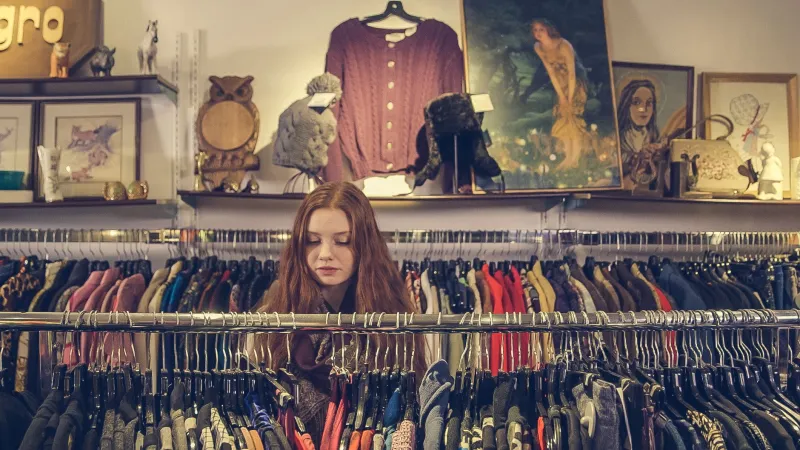
Boutique shopping, by its nature, tends to slow this down. When you're in a curated space with a real human being who actually knows their inventory, impulse is harder to act on blindly. But it still happens. And it's worth knowing how to catch yourself.
The Questions That Cut Through the Noise
Next time you're holding something that you love right now, try asking a few honest questions before you commit:
Does this fit something I already own? Not in a matchy-matchy way — in a this would work with at least three things in my closet way. If you're drawing a blank, that's information.
Would I still want this if I'd had a totally normal day? This one stings a little, but it's useful. If the answer is genuinely yes, that's a good sign. If you can feel the hesitation creeping in, pay attention to it.
Am I buying the item or the feeling it's promising me? Sometimes a piece of clothing represents a version of yourself you want to become — more adventurous, more polished, more something. That's not always bad. But if the gap between who you are right now and who that item assumes you are is really wide, it might sit unworn.
Have I loved something similar before, or is this new territory? New territory isn't off-limits, but it deserves more scrutiny. Trying a new direction in your style is exciting. Buying something that looks nothing like anything you've ever worn because you're having a rough week is a different thing entirely.
What Your Closet Is Actually Tracking
Here's a slightly uncomfortable truth: your closet is a mood diary. Pull it apart sometime and you can probably map the emotional landscape of the last few years. The phase when you were trying to reinvent yourself. The period when you bought everything in one color because it felt safe. The stretch of impulsive purchases that all still have tags on them.
None of that is shameful — it's human. But if you're trying to build a wardrobe that actually reflects who you are and makes getting dressed feel good on a consistent basis, it helps to notice the patterns.
Boutique shoppers often have an advantage here, because the shopping experience itself tends to be more deliberate. You're not scrolling past 400 options at midnight. You're in a real space, looking at things that were actually chosen with intention, and often talking to someone who can offer a real perspective. That environment naturally invites more thoughtful decisions.
But even in the best environment, the pull of a mood purchase is real. The trick is building enough self-awareness that you can feel it happening.
Building Style That Holds Up Beyond the Moment
The goal isn't to shop without feeling anything — that would be both impossible and kind of joyless. Emotion is a totally valid part of how we connect with clothing. The goal is to make sure the feeling you're chasing is yours, not just the closest available hit of novelty.
A few habits that help:
Give yourself a beat. If you're in a boutique and something is calling your name loudly, try walking the rest of the store first. Come back to it. If it still feels right after you've seen everything else, that's more signal than less.
Name what you're actually looking for. Before you shop — whether in-store or online — try articulating what gap you're trying to fill. Not just "I need something new" but something more specific: a versatile layer, a going-out top that doesn't feel like every other going-out top, a piece in a color you've been gravitating toward. Specificity is a natural filter for impulsive choices.
Track what you actually reach for. The items you wear on repeat without thinking about it? Those are your style anchors. When you're shopping intentionally, you're looking for more of those — not more of everything.
Let a stylist in on the conversation. One of the genuinely underrated parts of shopping at a boutique is that the people there can offer an outside perspective. If you're holding something and you're not sure, ask. A good stylist isn't going to just tell you what you want to hear — they're going to help you figure out if it actually makes sense for you.
Feeling Good in Your Clothes vs. Feeling Good About Buying Them
There's a version of your wardrobe that makes you feel good every single morning — not because you bought a lot, but because what's there is genuinely yours. It reflects how you actually live, what you actually like, and who you actually are right now.
That wardrobe doesn't get built through mood purchases. It gets built through moments of real clarity — when you find something that fits your life, not just your afternoon.
The dopamine hit of a great find is real. But the longer, quieter satisfaction of reaching into your closet and having options that actually work? That one lasts.