Why Shopping Small Actually Changes What Ends Up in Your Cart

Let's be honest: most of us have bought something we didn't need because a website told us to. Maybe it was a "customers also bought" suggestion. Maybe it was a flash sale countdown timer. Maybe it was just sheer overwhelm — when you're staring down 4,000 results for "black blazer," you start grabbing at anything that looks close enough.
Boutique shopping operates on an entirely different logic. And once you understand why that is, it's hard to go back.
The Paradox of Too Many Choices
There's a well-documented psychological phenomenon called decision fatigue. The more choices you face, the worse your decision-making gets — not because you're bad at choosing, but because the human brain genuinely wasn't built to evaluate hundreds of options simultaneously. Mass-market retail, especially online, has essentially industrialized this fatigue. It's designed to keep you browsing, not to help you find the right thing.
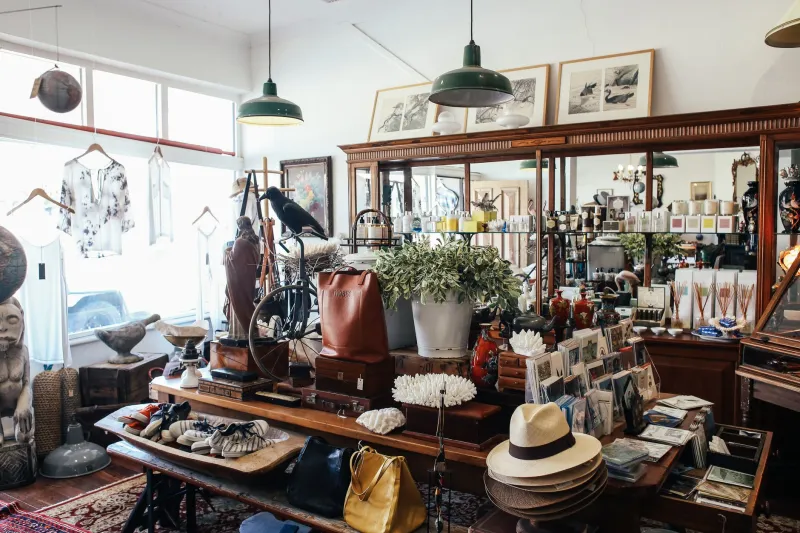
Boutiques work differently by design. A curated shop might carry three denim jackets instead of thirty. That constraint sounds limiting at first glance, but it's actually a gift. When a buyer has already done the work of narrowing a category down to the best options — the ones that fit a specific aesthetic, a quality standard, a customer profile — your job as a shopper becomes dramatically simpler. You're not filtering through noise. You're choosing between genuinely good options.
The result? You're far more likely to walk out with something you actually love.
Curation Is a Form of Expertise
When a boutique buyer selects inventory, they're making a series of highly informed judgments: What fabrics hold up? What silhouettes flatter a range of body types? What pieces feel fresh without being trendy in a way that'll look dated by next season? What fills a gap in a customer's existing wardrobe rather than just adding clutter?
That expertise rarely exists on a mass-market platform. Algorithms don't know what you already own. They don't know whether you're looking for something to wear to your sister's outdoor wedding or a piece that'll carry you through three seasons of work meetings. They optimize for clicks and conversions, not wardrobe coherence.
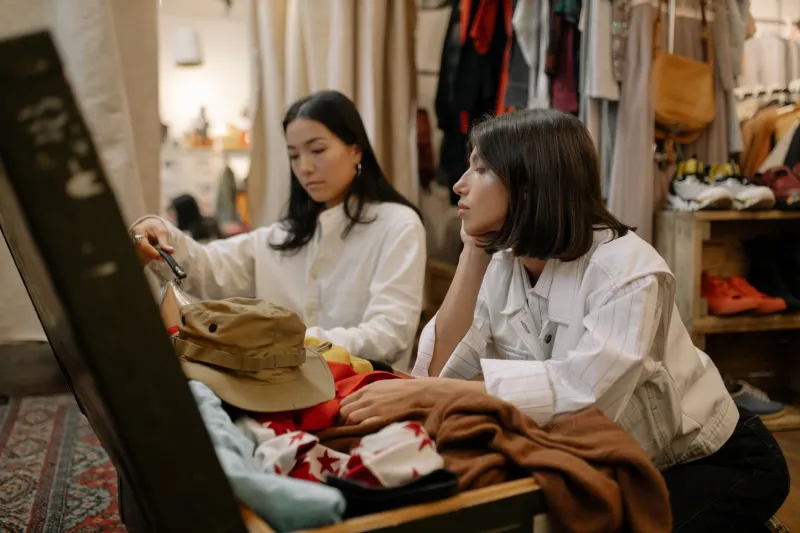
A boutique, especially one with attentive staff, can actually ask those questions — and then point you toward something that makes sense for your life. That's not a shopping experience; that's closer to a collaboration.
Impulse Buying Shrinks in the Right Environment
Here's something interesting: boutique shoppers tend to spend more per item but buy fewer things overall. And they return less stuff. That pattern tells a story.
When you're in a fast-fashion environment — physical or digital — impulse buying is practically baked in. Low price points make it easy to rationalize questionable purchases. High volume means there's always something "new" to pull your attention. The whole system rewards quantity.
Boutique shopping slows that cycle down. When a piece costs more (and quality boutique pieces usually do), you think harder before buying. You ask yourself whether it fits with what you own, whether you'll wear it more than twice, whether it's actually your style or just something that looked good on the mannequin. That friction — the slight pause before committing — is genuinely useful. It's the difference between buying something and choosing something.
And when you do choose, you tend to choose well.
The Wardrobe Cohesion Factor
One of the quieter benefits of boutique shopping is how it shapes your wardrobe over time. Because a good boutique has a consistent point of view — a particular aesthetic, a recurring color palette, a recognizable sensibility — the pieces you buy there tend to play well together. You're not just accumulating clothes; you're building something.
Mass-market shopping, by contrast, pulls from every direction at once. One week you're into minimalism, next week something maximalist catches your eye, and before long your closet is a collection of individual moments that don't quite add up to a wardrobe. Getting dressed becomes harder, not easier, even as you own more stuff.
Shopping from curated sources — boutiques that have a clear identity and stick to it — creates a natural through-line in your wardrobe. The pieces connect. They layer. They work together without you having to force it. That's not an accident; it's the direct result of buying from someone who had a vision when they chose the inventory.
The Feedback Loop Nobody Talks About
Something else happens when you shop intentionally over time: you get better at it. The more you practice buying things you genuinely love and wear, the more calibrated your instincts become. You start to recognize your actual style versus the style you think you should have. You stop being seduced by trends that don't suit you. You learn what cuts work on your body, what colors you reach for, what fabrics you actually want to live in.
Boutique environments accelerate this learning curve. When a salesperson asks good questions and makes thoughtful recommendations, you pick up information about yourself. When you wear a piece you bought carefully and love it every time, that reinforces good decision-making. It's a feedback loop — intentional choices lead to better outcomes, which lead to more intentional choices.
Compare that to the doom-scroll approach, where you're constantly reacting to what the algorithm surfaces. That loop doesn't teach you anything about yourself. It just keeps you buying.
It's Not About Spending More — It's About Spending Right
There's a misconception worth addressing: boutique shopping isn't just for people with big budgets. Yes, quality costs money, and good boutiques don't compete on price the way big-box retailers do. But the math shifts when you factor in what you actually use.
A $200 blouse you wear forty times has a lower cost-per-wear than a $30 blouse you wear twice and donate. A closet full of pieces that work together requires fewer total items than a closet full of things that don't quite fit or don't quite match. Shopping small, shopping intentionally, shopping from curated sources — it's not a luxury mindset. It's actually a more efficient one.
At Sarami Boutique, curation isn't just an aesthetic choice — it's a philosophy. Every piece on the floor is there because someone made a deliberate decision that it belonged. That decision-making, that point of view, is what you're really buying into when you shop small. And your wardrobe — and your Saturday mornings getting dressed — will thank you for it.