How Your Favorite Boutique Quietly Became Your Most Meaningful Social Circle

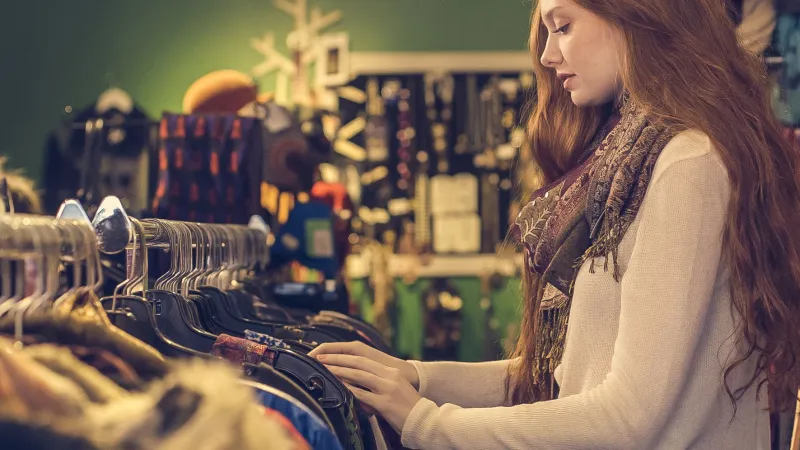
Picture this: You walk into your favorite local boutique on a Saturday afternoon. Before you've even made it past the front display, someone calls your name. Not because they scanned your loyalty card or pulled up your purchase history on a tablet — but because they genuinely remember you. They remember that you bought that burnt-orange wrap dress for your sister's birthday dinner last fall, and that you've been hunting for the perfect wide-leg trouser ever since.
That moment? It's not a sales tactic. It's community.
And it turns out, that sense of belonging is quietly reshaping how a lot of us think about getting dressed.
The Thing Big Retailers Can't Buy
Chain stores have invested billions trying to simulate personalization. Recommendation engines, loyalty programs, targeted ads that follow you around the internet for weeks after you glanced at a pair of sandals — all of it designed to make you feel seen. But most of us can tell the difference between a machine guessing at our taste and an actual human being who remembers that you hate anything with a scratchy neckline.
Independent boutiques operate on a completely different currency: genuine human attention. When a stylist at a small shop learns your preferences, they're not logging data points. They're building a relationship. And relationships, it turns out, are incredibly powerful style tools.
Customers who shop regularly at independent boutiques consistently describe something that sounds less like retail and more like being part of a close-knit group. There's a rhythm to it — the familiar faces behind the counter, the other regulars you start to recognize, the shared excitement when new inventory arrives. It's a social ecosystem that grows organically, and it has a surprisingly strong influence on how people dress.
When Shopping Becomes Belonging
Take the story of two women in their late thirties who met while both reaching for the same silk blouse at a boutique in Nashville. They laughed, argued good-naturedly about who spotted it first, and ended up splitting a styling session with the shop's in-house consultant. Three years later, they're close friends who road-trip together to shop boutiques in other cities.
"I never would have met her at Target," one of them has said. "There's no version of that story that happens in a big store."
That's not a fluke. Boutiques create the conditions for exactly that kind of accidental connection. The spaces are intimate. The staff is engaged. The customers who keep coming back tend to share a certain sensibility — a preference for things that feel considered, intentional, a little different from what everyone else is wearing. That common ground is social glue.
And once you're part of that informal community, something interesting happens to the way you shop. You start thinking about your purchases differently. You're not just buying a jacket — you're buying something you'll wear to the next event where you'll see these people, something your stylist helped you pick, something that carries a small story.
The Stylist Who Actually Knows You
One of the most underrated aspects of boutique culture is the ongoing relationship with a stylist or sales associate who genuinely tracks your evolution as a dresser. This isn't a one-time consultation or a chatbot asking about your body type. It's someone who noticed that you've been gravitating toward deeper colors lately, or that you've started experimenting with proportion in ways you weren't confident enough to try a year ago.
That kind of observation — the kind that only comes from consistent human contact — shapes what you reach for in ways that feel almost invisible. Suddenly you're trying on things you'd have dismissed before, because someone you trust handed it to you and said, "Just try it." And more often than not, it works.
This is the boutique effect in its purest form: the community around you expands what you think is possible for yourself, stylistically speaking. Your style tribe isn't just your friends on Instagram or the influencers you follow. It's the people in that room with you, who see you in real light, in real clothes, responding in real time.
Style Tribes Are Built, Not Born
The phrase "style tribe" gets thrown around a lot in fashion media, usually in the context of aesthetics — you're a "quiet luxury" person or a "maximalist" person, and here are the ten influencers who share your vibe. But a real style tribe is less about a curated aesthetic board and more about a living, breathing group of people who influence each other over time.
Boutique regulars describe this dynamic constantly. They'll mention a piece another customer was wearing when they came in for an exchange, and how seeing it styled a certain way changed how they thought about their own wardrobe. Or they'll talk about how the stylist mentioning that another customer — someone whose taste they admire — loved a particular brand made them pay closer attention to it.
This is word-of-mouth at its most organic. It's also, frankly, better style advice than most of us get anywhere else. Because it's coming from people who know the actual clothes, who've seen them on real bodies, and who have no incentive to oversell you on something that won't work for your life.
Why the Social Dimension Changes What You Buy
Here's something worth sitting with: when you feel genuinely connected to the place you're shopping, you make better decisions. Not "better" in some abstract moral sense, but better in the practical sense that you buy things you actually wear, that fit your real life, that you feel good in when you put them on six months later.
The pressure to impulse-buy fades when you're in a space where someone knows you well enough to say, "Honestly? That's not your best color." The anxiety of shopping alone — that low-grade uncertainty about whether something is actually working — eases when you've got people around you whose opinions you've come to trust.
That's not just a nicer shopping experience. It's a fundamentally different relationship with your wardrobe. And it starts with finding your people.
Finding Your Place in the Boutique World
If you've never experienced this kind of shopping community, it might sound a little idealistic. But it's more accessible than you'd think. It starts with returning to the same place more than once. Introducing yourself. Letting the staff get to know what you like and what you don't. Being curious about the other people sharing the space with you.
The community doesn't announce itself. It builds quietly, visit by visit, conversation by conversation. And one day you walk in and realize you're not just a customer — you're a regular. You're part of something.
That's the boutique effect. And once you've felt it, shopping anywhere else starts to feel a little lonely by comparison.