Dressed to Feel: What Science Says About Why Your Clothes Actually Affect Your Mood
We've all been there. You're having a rough Tuesday, your inbox is a disaster, and somehow — somehow — the idea of buying a new top feels like a solution. You scroll, you click, you feel a little spark of something. The package arrives. You wear it twice. Then it lives on the chair in your bedroom, and somehow Tuesday still finds you.
This isn't a personal failing. It's actually pretty well-documented psychology. And understanding it might be the single most useful thing you can do for both your wardrobe and your mental health.
The Dopamine Loop That's Working Against You
Here's what's happening in your brain when you impulse-buy a trend piece: dopamine — the neurotransmitter associated with anticipation and reward — spikes during the hunt, not the having. Researchers have found that the pleasure of shopping is largely tied to novelty and expectation. The moment a purchase is made, that dopamine hit begins to fade, sometimes before the item even ships.
Fast fashion has essentially been engineered around this loop. Microtrends cycle so quickly that there's always something new to anticipate, always a reason to feel that next hit. But the emotional payoff from wearing those pieces? It tends to be shallow and short. Because the item wasn't chosen for you — it was chosen because it was everywhere, because everyone was wearing it, because the algorithm served it up at exactly the right moment of vulnerability.
That's not dressing for your mood. That's dressing for a feed.
What 'Enclothed Cognition' Actually Means for Your Closet
In 2012, researchers Hajo Adam and Adam D. Galinsky coined the term enclothed cognition to describe the systematic influence that clothing has on the wearer's psychological processes. Their findings were striking: what we wear doesn't just reflect how we feel — it actively shapes how we think and perform.
The key variable, though, wasn't just what people wore. It was how much meaning they attached to it. A lab coat worn by someone who believed it belonged to a doctor produced measurably sharper attention than the same coat worn by someone told it was a painter's smock. The garment was identical. The psychological effect was not.
This is where intentional, curated shopping starts to pull ahead of trend-chasing in a real, measurable way. When you buy a piece because it fits your body, your lifestyle, your actual taste — when you've tried it on, thought about it, maybe talked through it with someone who knows your style — that item carries meaning. And meaning, it turns out, is what actually makes you feel good.
Color Psychology Isn't Just a Pinterest Concept
Color is one of the most immediate tools we have for influencing our own emotional state, and it's been studied seriously in clinical and behavioral psychology for decades. Warm tones — terracotta, rust, golden yellow — tend to evoke energy and warmth. Cooler shades like sage, slate blue, and soft lavender are associated with calm and clarity. Deep, saturated colors often project authority and groundedness.
But here's the nuance that gets lost in generic 'wear red to feel powerful' advice: color response is also deeply personal. Cultural context, personal history, skin tone, and individual association all shape how a color makes you feel versus how it might affect someone else. This is exactly why a stylist who actually knows you — your history, your preferences, your life — can guide you toward colors that work specifically for your psychology, not just a generalized chart.
Boutique shopping, at its best, creates space for exactly this kind of personalized guidance. It's the difference between a recommendation from someone who's watched you light up in a particular shade and a trending color palette generated because it performed well on social media last month.
The Lasting High Is Built, Not Bought Impulsively
There's a concept in positive psychology called hedonic adaptation — the tendency for humans to return to a baseline level of happiness regardless of what happens to them, good or bad. It's why lottery winners aren't permanently happier, and it's why the thrill of a new purchase fades so quickly.
The exception to hedonic adaptation? Experiences and items that are deeply connected to our identity and values. When something aligns with who we actually are — not who we were three weeks ago when that trend was everywhere — the emotional resonance lasts longer. We reach for it more. We feel more like ourselves in it.
This is the quiet argument for building a wardrobe with intention rather than impulse. Not necessarily spending more money, but spending it differently. Choosing pieces that were made to last, that fit well, that reflect something true about your taste — those items don't just hang in your closet. They become part of how you navigate your days.
Why Curation Changes the Emotional Math
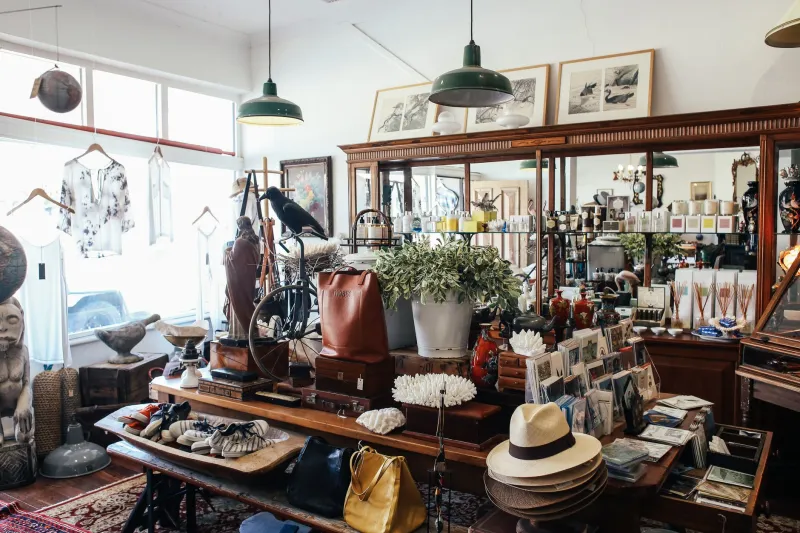
When a boutique curates its inventory — actually edits and selects pieces based on quality, wearability, and a coherent aesthetic point of view — it does some of the emotional work for you. You're not scrolling through ten thousand options in a warehouse. You're browsing a thoughtful selection made by people who care about what they're offering.
That context matters more than we realize. Shopping in an environment where every piece has been deliberately chosen makes it easier to slow down, to actually feel how something fits, to ask whether it genuinely belongs in your life. It shifts the experience from reactive to intentional — and that shift is where lasting satisfaction lives.
The pieces you end up with from that kind of shopping trip aren't just clothes. They're small, wearable decisions that reflect your actual self back to you every morning.
Getting Dressed as a Daily Practice
Here's the reframe that changes everything: getting dressed isn't a problem to solve. It's a practice — one of the few daily rituals where you have almost complete creative control over how you present yourself to the world and, more importantly, to yourself.
When your closet is full of things you genuinely love — pieces chosen for how they make you feel rather than how they performed in an algorithm — that practice becomes genuinely pleasurable. The mood boost you were chasing with the impulse purchase? It's already there, waiting in the clothes you chose with care.
That's not a myth. That's just good dressing.